|
"Jimmy," you ask, "What do you do if your
electric guitar pickups make an unholy, high-pitched squealing
sound when the gain is too high on your amp?"
Good question, folks, one I'm sure many of you have experienced.
The squealing is known as microphonic
feedback, to be differentiated from the slow, swelling,
"good" feedback cultivated by Jimmi Hendrix. Well,
if you find yourself in this unlucky predicament, here's what
I suggest:

You need some wax. Serious
guitar techs will buy canning paraffin, but they don't
sell this at the bodega next door. However, almost as unlikely
for the neighborhood, my bodega does sell menorah candles.
I figure they've gotta be pretty much the same thing. The
pros
also tell you to use beeswax, which doesn't expand or contract
to the same degree as paraffin and will help to temper the
wax process you are about to undertake. But beeswax is a pain
to find. So I just yanked the honeycomb out of a jar of honey.
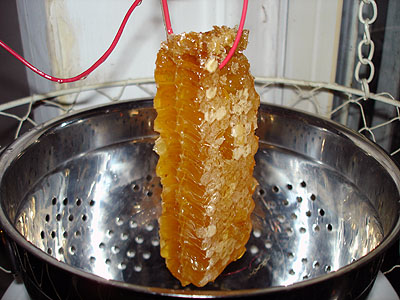
After letting it drip for a while, I crushed the comb in
a colander and rinsed off the honey. Turns out the 6-inch
slab of honeycomb only smooshes down to a small blob of beeswax
but whatever. It's too cold to go out searching for the right
stuff.
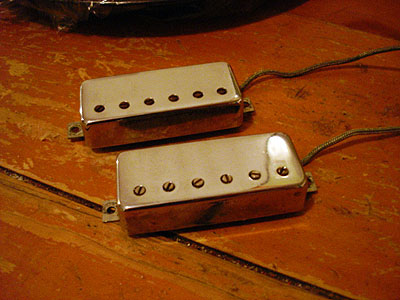
At some point you need to remove the pickups from your guitar.
Hopefully this will be easier for your than it was for me.
Clean the schmutz off the pickups before proceeding. I don't
know what that gunk on the side of it was but it was gross.
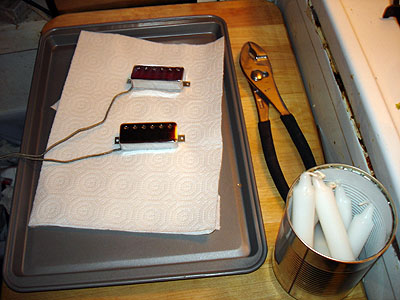
You need a double boiler setup to make this work. I used
a pot of boiling water with a can stuck in it (Progresso Kidney
Beans!). Put a bunch of candles and the beeswax in the can
and place it in the boiling water. You'll have to hold it
in place with a pair of pliers until the weight of the wax
holds it down. At this point you will want to shoo away any
nosy bandmates who keep giving you unsolicited advice. Offer
them more whiskey and have them mess with the record player.
This should give the wax enough time to melt.
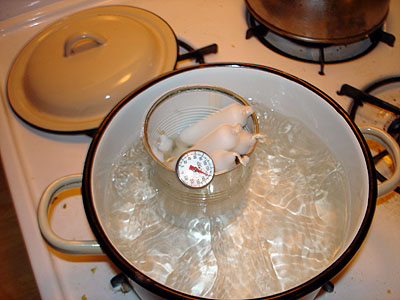
Make sure the temperature doesn't get too high; wax melts
at 148° F and they say you can damage the pickup if the
wax is much hotter than that.
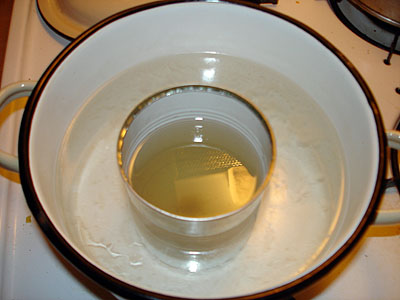
I let the wax get too hot so I had to sit around for a long
time waiting for it to cool. Anyway when the temperature is
right around 150°, hold the pickup by the wire and dip
it into wax. Tap it on the bottom of the can to make sure
any air bubbles come out but otherwise keep it in the center
of the can. Remove it and dip it in several times to make
sure the wax coats the pickup well. Remove it from the wax
and hold it by the wire for a minute so the wax sets up a
little before putting down on some paper towels. Repeat the
process for the other pickup. Pray to god this works because
it's a pain in the ass to go through all this trouble with
this somewhat medieval method to reduce feedback.
Let the pickups sit for a few minutes and then scrape off
the wax on the front and sides of the pickups. A lot of the
wax will just peel off, but use a paper towel to wipe off
the rest.
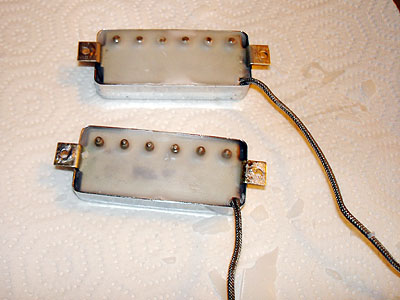
I left the wax on the back of the pickup, but I don't think
that's really necessary. The important thing is that the wax
gets inside and coats the coils. This will immobilize the
inner workings of the pickup, whose previous vibrations were
the cause of the feedback.
Now you just have to put the pickups back in. I was too tired
to do this part as it involves using a soldering iron on which
I have already burned myself a couple of times so I didn't
want to risk further injury. Tomorrow we'll find out if all
this trouble pays off! How exciting for you!
Comments
[
]
|


